
He Cheng
何成Qin Huai and Qin Luo's cousin, noted for struggling academically.
- Mother (Mom) Qin Xiuli
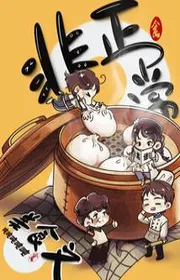
非正常美食文
Dun Dun Dun Dun Dun
Qin Huai and Qin Luo's cousin, noted for struggling academically.
An acquaintance or helper assisting the Qin family during their transition.
The protagonist, a former orphan adopted by a breakfast shop owner, who inherits a substantial fortune and a community cafeteria. He possesses a mysterious 'System' that tracks his culinary skills and provides tasks.
Qin Huai's younger sister. Cheerful, energetic, and fond of her brother, though slightly dramatic.
Qin Huai's adoptive mother. Pragmatic, capable, and hardworking.
Qin Huai's adoptive father. He manages the family breakfast stall.
The paternal grandmother of Qin Luo and Qin Huai, who suffered years of anxiety and guilt due to her children's struggle with fertility.
Qin Congwen's younger sister who struggled to conceive for many years before finally having a son.
A diligent neighborhood committee member known for her helpful nature and enthusiasm for community organization.
Chen Huihong's daughter, a third-grade student at the local experimental primary school.
The paternal grandfather of Qin Luo and Qin Huai, a traditional man who once paid a fortune teller to predict the family's fertility.
Qu Liewhu's young granddaughter, who is actually a hidden spirit.
A rustic hunter who brings his granddaughter to the provincial capital.
An elderly customer who frequently reminisces about his youth in Suzhou.
A skilled pastry chef who comes to work at the cafeteria.
A staff member working at the cafeteria.
A loyal elderly regular customer of the cafeteria.
An experienced veteran pastry chef and Zheng Siyuan's father.
A food critic publishing reviews in Zhiwei magazine.
The owner of Huang Ji restaurant recovering from back strain.
A professionally trained assistant working at Huang Ji.
An assistant tasked with picking up arriving guests.
An ephemeral spirit in his eighth reincarnation reuniting with an old friend.
An elderly owner of Fenyuan who has lived for over ninety years.
A companion accompanying Qin Huai during his visit.
Zhao Cheng'an's identity during his first life.
A person from Zhao Cheng'an's distant past life.
A figure whose past memories contain a recipe for potato dumplings.
A diligent and hardworking employee at Yunzhong Cafeteria.
A local resident who previously hosted a tea party.
A business-founding beast acting as a helpful assistant in the cafeteria.
An acquaintance and regular associate mentioned by Qin Huai.
A pastry chef visiting Huang Ji restaurant.
Tan Weian's junior fellow apprentice.
An acquaintance who helps pick up items for Luo Jun.
A young madam of the Li family and a long-time acquaintance.
A customer dining at Huang Ji who enjoys the pastries.
A regular customer and dining companion of Uncle Wang.
An elderly regular customer with memories of old state-run eateries.
An experienced senior chef who guides Qin Huai in culinary arts.
An elderly foodie with a passion for delicious traditional dishes.
Zheng Siyuan's unorthodox father famous for his wildly creative cooking experiments.
A mystical creature participating in the neighborhood tea party.
A participant attending the lively community gathering.
An unorthodox veteran master chef known for his creative baking.
Chen Huihong's younger brother who assists with transport arrangements.
A professional chef from Zhiweiju hired at the cafeteria.
A professional chef from Zhiweiju hired at the cafeteria.
A young man with past-life memories who tragically dies in an accident.
A mystical entity mentioned by Xu Nuo who struggles to act human.
A Huang Ji apprentice prone to elaborate gossip and theories.
Dong Shi's older brother and a chef at Huang Ji.
A staff member at Huang Ji drawn into workplace gossip.
A worker at Huang Ji restaurant.
A skilled cook who prepares delicious meals.
The sensible son of a farmer living upstairs.
A customer who bought fruit pastries.
A master pastry chef at Zhiweiju.
A kitchen staff member responsible for preparing ingredients.
Gong Liang's partner who works at the local theater troupe.
Founder of Haowei and a surprisingly good boss.
A skilled hot-kitchen chef and Zang Mu's disciple.
A veteran master chef and Zang Liang's uncle.
A supportive boss who arranges accommodations and food supplies for Qin Huai.
Jiang Weiguo's youngest grandson with exceptional culinary potential.
An elderly regular customer who enjoys dishes made by Qin Huai.
Qu Jing's grandfather and a rustic hunter.
A chef working at Zhiweiju restaurant.
A pastry apprentice known for initiating workshop conversations.
A pastry apprentice working alongside Zhao Cheng'an.
The owner of Baobaozhai pastry shop.
An acquaintance discussing culinary trends and Fenyuan.
A culinary expert who taught Qin Huai unique cooking methods.
Wang Gensheng's sharp-tongued wife.
A regular customer at the community cafeteria.
A well-known Huaiyang cuisine chef and head chef of Chengfangju.
A renowned pastry master and tutorial creator.
A notoriously foolish individual mentioned in tutorial videos.
A renowned pastry chef from Baobaozhai known for his sharp tongue.
Cao Guixiang's son who once comforted Shi Dadan.
Cao Guixiang's daughter present at the family dinner.
A fortune teller and planner with a penchant for giving readings.
Basic culinary ability for food preparation.
Technical skill for preparing yeast dough, ranked as intermediate level.
Advanced sensory skill for evaluating the quality of cooked dishes.
Beginner level skill for adding aesthetic design to pastries.
Intermediate level skill focused on frying dough sticks.
Beginner skill for managing cooking temperatures.
Intermediate skill for ensuring a business remains profitable.
Advanced skill in blending ingredients for savory fillings.
Master-level skill used for social manipulation and fabrication.
A traditional baked pastry known for its crispy, golden-brown crust topped with sesame seeds. It can be prepared with savory fillings like pork or shrimp, or sweet fillings like red bean paste.
A mysterious, supernatural system possessed by the protagonist which aids in the mastery of culinary arts and provides instructions.
A specific dumpling preparation technique that emphasizes a precise ratio of meat cuts, such as pork leg meat and pork belly, to achieve specific textures like tenderness and juiciness.
A culinary skill in which Qin Huai is notably lacking, described as being much worse than simple neighborhood eateries.
A culinary specialty of Qin Huai, noted for producing high-quality items like meat buns, crab shell cakes, and various traditional desserts.
An advanced Lu cuisine wok-flipping technique.
A traditional baked pastry with a unique flavor profile.
A traditional festive pastry baked with sweet shredded coconut.
A soft, sweet dessert made with rich coconut milk.
A sweet traditional pastry delicately scented with osmanthus flowers.
A traditional steamed bun made with fermented rice wine.
Traditional sweet stuffed glutinous rice dumplings.
A savory steamed bun filled with three diced ingredients.
A savory steamed bun filled with five diced ingredients.
A traditional savory dumpling with a festive filling.
A specialty pastry roll with a rich, flavorful filling.
A delicate, sweet pastry made from fine mung bean flour.
A specialized traditional pastry recipe made with crab roe.
A traditional sweet pastry made from glutinous rice and bean paste.
A classic savory braised pork dish.
A traditional Jiangnan-style thickened fish soup.
A comforting soup made from hard rice cakes.
A traditional pastry made using an old recipe.
A traditional sweet pastry filling made from assorted nuts and fruits.
A traditional delicate steamed pastry.
A traditional auspicious steamed rice cake.
A delicate, thinly sliced traditional sweet pastry.
A traditional medicinal pastry made with eight ingredients.
A traditional soft pastry made with Gordon euryale seeds.
A traditional plum blossom-shaped sweet stuffed pastry.
A traditional begonia-shaped sweet baked pastry.
A flaky pastry filled with savory crab roe.
A traditional savory mooncake with a flaky crust and pork filling.
A flaky pastry crafted in the shape of a dragon eye.
An intricately shaped flaky pastry resembling a chrysanthemum flower.
A traditional sweet, crumbly round cookie-like pastry.
A flaky pastry featuring a matcha crust and an egg yolk filling.
An exquisite flaky pastry shaped like a blooming lotus.
An iconic anime dim sum dish featuring a precise ingredient ratio.
A simple, traditional sweet rice pastry.
A traditional twisted and layered steamed roll.
A classic, simple white steamed bread bun.
A delicate pastry meticulously shaped and crafted to resemble an apple.
A city mentioned as a possible location for culinary apprenticeship.
The institution where Qin Huai lived during his childhood and where he first practiced basic cooking skills.
An upscale residential compound containing high-value apartments.
A community cafeteria located at the estate entrance, inherited by Qin Huai.
The local primary school attended by Chen Huihui.
The family-operated business that raised Qin Huai.
The school where Chen Huihong's daughter studies.
An old-established pastry shop run by a mysterious young man.
A historic city where Wang Laogen spent his youth working at a textile factory.
A renowned pastry restaurant experiencing massive daily crowds.
A prominent restaurant and culinary establishment.
A historic northern city mentioned in the dream sequence.
A historic courtyard garden turned restaurant in Peiping.
A county town mentioned as a hometown destination.
The city where the protagonist operates the cafeteria.
A southern province where He Cheng returns.
A major city with advanced medical facilities.
A major bustling metropolis.
A historical region in southwestern China.
A named eatery and food shop.
A local residential community near the breakfast shop.
A prestigious historical restaurant located in Peiping.
A renowned pastry shop managed by Ling Guangzhao.
A notable local restaurant.
A well-known restaurant specializing in Huaiyang cuisine.